Introduction
Bankruptcy legal costs in Kansas vary depending on the bankruptcy chapter filed, the structure of your debts, and whether the case proceeds smoothly or requires additional court involvement. Straightforward consumer filings typically involve predictable flat fees, while cases with multiple creditors, assets, or objections often require significantly more legal work.
In Kansas, bankruptcy expenses are frequently affected by local trustee administration practices, including document review standards, repayment plan scrutiny in Chapter 13 cases, and how quickly required corrections must be resolved to avoid dismissal.
Bankruptcy Fee Breakdown in Kansas
| Filing Type or Service | Typical Cost Range |
|---|---|
| Chapter 7 (standard filing) | $1,650 – $3,900 |
| Chapter 13 (repayment plan cases) | $3,400 – $7,800 |
| High-asset or complex cases | $6,500 – $17,500+ |
| Emergency or expedited filing | $2,000 – $4,500 |
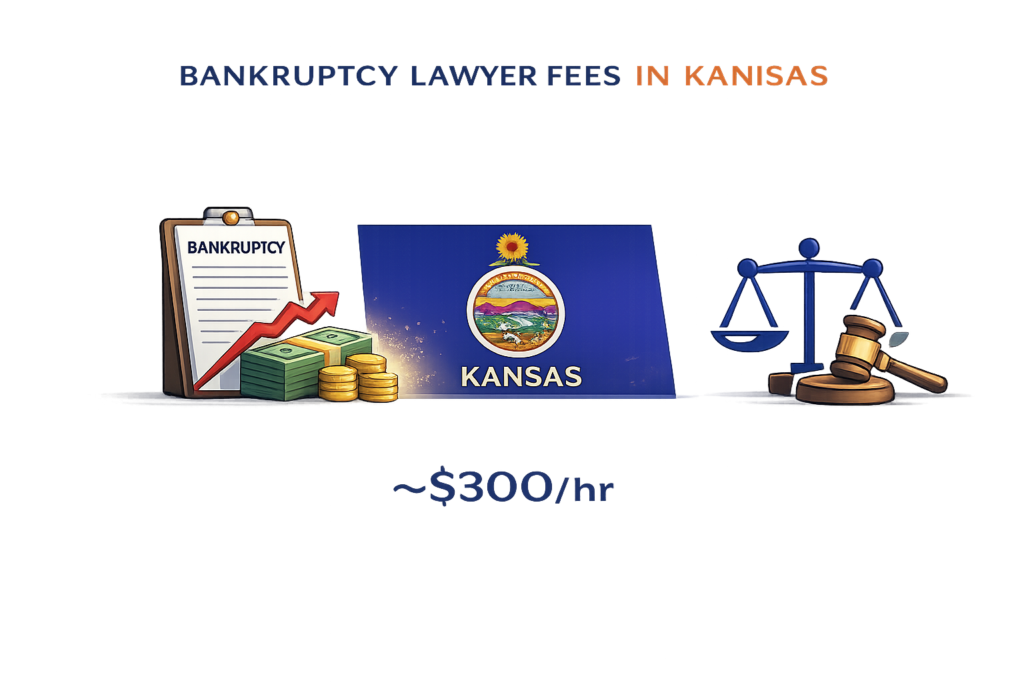
| Attorney hourly billing (complex matters) | $260 – $430 per hour |
For national averages, see: How Much Do Lawyers Cost in the United States?
Kansas Bankruptcy Court & Administrative Costs
| Required Cost Category | Cost Characteristics |
|---|---|
| Federal bankruptcy filing fee | Fixed |
| Credit counseling course | Mandatory |
| Debtor education course | Mandatory |
| Trustee administration fees | Case-dependent |
| Document amendments or refiling | Variable |
| Payment plan administration (Chapter 13) | Ongoing |
Related guide: Court Costs in the United States
Bankruptcy Cost Escalation Factors in Kansas
| Escalation Trigger | Why Costs Increase |
|---|---|
| Asset ownership | Requires valuation and disclosure |
| Creditor objections | Additional hearings and motions |
| Chapter conversion | New filings and recalculations |
| Incomplete documentation | Delays and refiling |
| Trustee plan objections | Extended repayment negotiations |
How Kansas Bankruptcy Costs Compare to Other States
Kansas bankruptcy costs often sit between high-volume urban districts and smaller rural jurisdictions. While filing fees are federally standardized, local trustee oversight and repayment plan review practices can influence how much attorney time a case ultimately requires.
Compare bankruptcy costs by state here: Legal Costs by State
Strategies to Reduce Bankruptcy Costs in Kansas
| Cost-Control Step | Practical Impact |
|---|---|
| Preparing documents before filing | Fewer amendments |
| Choosing the correct chapter early | Avoids conversion costs |
| Completing counseling promptly | Prevents dismissal |
| Disclosing assets accurately | Reduces trustee objections |
| Responding quickly to court notices | Shortens case timeline |
FAQ — Bankruptcy Costs in Kansas
What does filing for bankruptcy usually cost in Kansas?
Most cases fall between $1,500 and $9,000+, depending on the bankruptcy chapter and financial complexity.
Which situations tend to make bankruptcy more expensive in Kansas?
Asset ownership, creditor objections, and repayment plan disputes commonly increase costs.
How does the bankruptcy process typically work for Kansas residents?
Cases are filed in federal court and reviewed by trustees, with timelines depending on compliance and documentation accuracy.
When does filing bankruptcy without a lawyer become risky in Kansas?
Risk rises significantly when assets, business income, or Chapter 13 repayment plans are involved.
How long do bankruptcy cases in Kansas usually take to complete?
Chapter 7 cases often close within a few months, while Chapter 13 cases last 3–5 years.
What issues most often delay bankruptcy cases in Kansas?
Incomplete disclosures, missed counseling requirements, and trustee objections are common causes.
Which bankruptcy fees are typically non-refundable in Kansas?
Court filing fees, counseling costs, and trustee payments are generally non-refundable.
Related Guides
Lawyer Fees in the United States
Legal Costs in Kansas
Bankruptcy Legal Costs
External Resources
U.S. Bankruptcy Court — District of Kansas
Kansas Judicial Branch
Conclusion
Bankruptcy legal costs in Kansas typically range from $1,500 for basic Chapter 7 filings to over $9,000 for complex or long-term repayment cases. Attorney fees, trustee oversight, court requirements, and documentation accuracy are the primary cost drivers. Understanding these factors helps filers plan realistically and avoid unnecessary delays or expenses.