What Are Contingency Fees and How Do They Work?
In many legal cases, especially personal injury and civil claims, lawyers work on a contingency fee basis. This means clients do not pay upfront legal fees and instead pay a percentage of any settlement or court award. This guide explains how contingency fees work, what percentage lawyers typically take, including the contingency fees lawyers percentage, and what clients should know before agreeing to this billing model.
What Is a Contingency Fee?
A contingency fee is a payment structure where a lawyer’s fee depends on the outcome of the case. If the lawyer does not win or secure a settlement, the client generally does not pay attorney fees.
This model is commonly used in cases where clients may not be able to afford hourly or flat fees upfront.
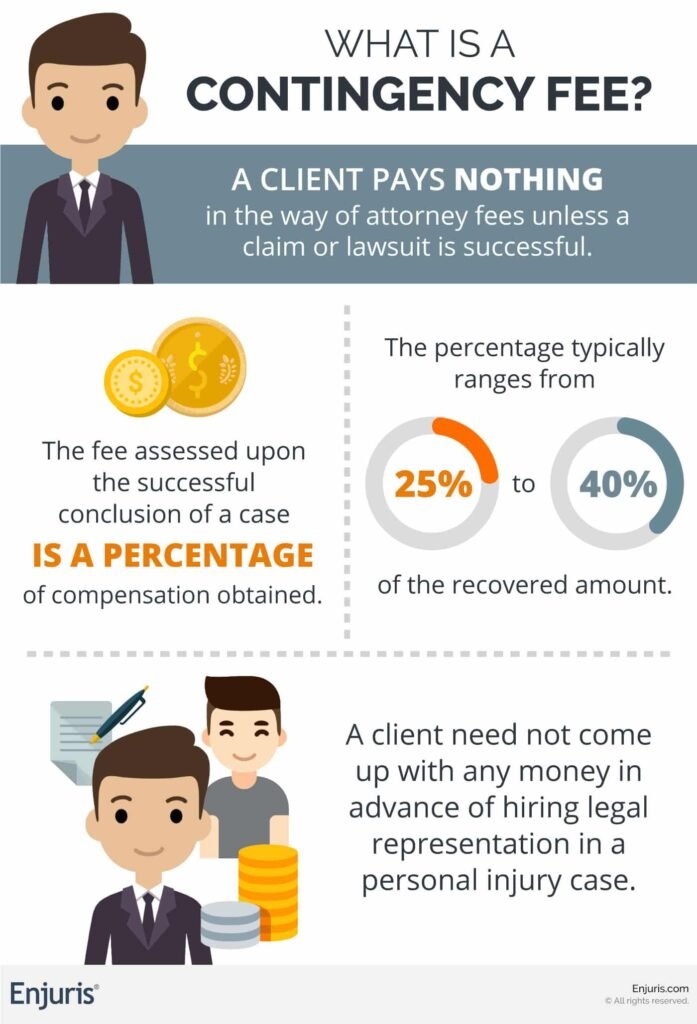
contingency fees lawyers percentage explained
What Percentage Do Lawyers Take on Contingency?
Typical contingency fees in the United States usually range between 25% and 40%, depending on the stage and complexity of the case.
Common percentage ranges include:
- 25%–33% for cases settled early
- 33% (one-third) for standard cases
- 35%–40% for cases that go to trial or appeal
The exact percentage is outlined in the contingency fee agreement
Higher percentages often reflect increased legal risk, longer timelines, and higher upfront costs covered by the lawyer.
Practice Areas That Commonly Use Contingency Fees
Contingency fees are most common in:
- Personal injury cases
- Medical malpractice claims
- Employment discrimination cases
- Some civil litigation matters
Criminal defense and family law cases typically do not use contingency fees.
Are Case Expenses Included in Contingency Fees?
Contingency fees usually cover attorney compensation only. Clients may still be responsible for case-related expenses such as:
- Court filing fees
- Expert witness fees
- Medical record retrieval
- Investigation costs
These expenses may be deducted from the settlement before or after the lawyer’s percentage is applied, depending on the agreement.
Contingency Fees vs Hourly and Flat Fee Lawyers
Unlike hourly or flat fees, contingency fees align the lawyer’s compensation with case success. However, they may result in higher overall costs if the settlement is large.
For a comparison of pricing structures, see our guide on flat fee vs hourly lawyer costs.
Are Contingency Fees Negotiable?
In some cases, yes. Clients may be able to negotiate the percentage, especially for high-value claims or cases likely to settle quickly. Always review the fee agreement carefully before signing.
For an overview of attorney pricing models and legal costs, visit our Lawyer Fees in the United States guide
Pros and Cons of Contingency Fee Agreements
Pros of contingency fee arrangements include:
- No upfront legal fees
- Lawyers are motivated by case success
- Access to legal representation without financial risk
Cons may include:
- Higher overall cost if the settlement is large
- Limited availability for certain case types
- Less control over litigation decisions in some cases
Understanding both sides helps determine if this billing model is right for your situation.
FAQ: Contingency Fees Explained: What Percentage Do Lawyers Take?
What is the standard contingency fee percentage?
The most common contingency fee is around 33%, though it can range from 25% to 40%.
Do I pay legal fees if I lose the case?
Usually no, but you may still owe case-related expenses depending on the agreement.
Can contingency fees be negotiated?
Sometimes. Clients can discuss the percentage before signing a fee agreement.
Are contingency fees legal in all states?
Most states allow contingency fees, but some impose limits or require specific disclosures.
Can contingency fee percentages increase during a case?
Yes. Some agreements increase the percentage if a case proceeds to trial or appeal due to higher time, risk, and expenses.
Are contingency fees regulated by law?
In many states, contingency fees are regulated or capped, especially for medical malpractice cases. Rules vary by state.